What Is The Proper Slope For A Wheelchair Ramp
Click here to check the latest prices on What Is The Proper Slope For A Wheelchair Ramp
Understanding what the proper slope for a wheelchair ramp should be is one of the most important things when ensuring accessibility and safety at home, in public places, or at work. Whether you’re installing a ramp for a loved one, setting up access for customers, or improving an existing space, the right slope ensures comfort, confidence, and security for all users.
Why Ramp Slope Matters
The slope of a ramp determines how easy it is to go up and down safely. A steep ramp can be risky, especially for manual wheelchair users, while a ramp that’s too shallow may take up unnecessary space. The goal is balance — a slope that’s gentle enough for smooth travel, but practical for the space available.
Key benefits of choosing the right ramp slope include:
- Improved safety – Less chance of rolling backward or tipping.
- Comfortable navigation – Smooth, manageable incline for both powered and manual wheelchairs.
- Better independence – Users can travel alone without excessive strain.
- Legal compliance – Meets UK accessibility standards and building regulations.
Recommended UK Standards For Wheelchair Ramp Slope
In the UK, the general rule is that the ramp should not be too steep. According to accessibility guidelines, the proper gradient depends on how long and high the ramp is.
- 1:12 gradient – Ideal for most wheelchair users. For every 1 inch of height, you’ll need 12 inches of ramp length.
- 1:15 gradient – Better for public access areas or longer ramps where smooth travel is key.
- 1:20 gradient – Considered the most comfortable for continuous ramps or powered wheelchair use.
For example, if you need to overcome a rise of 30 cm, a 1:12 gradient would require a ramp at least 3.6 metres long. Shorter ramps can work for temporary access or assisted use, but a gentle slope is always safer and more stable.
How To Measure The Correct Ramp Angle
Measuring your ramp slope is simple once you know the math. Divide the total rise (height) by the length (horizontal distance). For example, a 1:12 slope means for every 1 unit of height, there are 12 units of length.
Common slopes:
- 1:12 – 4.8 degrees (most common for homes)
- 1:15 – 3.8 degrees (gentle slope for smooth travel)
- 1:20 – 2.9 degrees (very easy for all users)
Many modern wheelchair ramps now come with built-in measurements, making it easier to ensure you’re within the safe range.
Benefits Of Getting The Slope Right
Having the proper slope on your wheelchair ramp offers more than just comfort — it’s about independence, usability, and dignity. A correctly designed ramp provides effortless entry and exit without fear or fatigue. Plus, it looks professional and fits seamlessly into your environment.
Here are some additional advantages:
- Longevity – Proper slope reduces wear on the ramp surface and structure.
- Less maintenance – Smooth angles reduce scuffing and impact damage.
- Universal access – Works for wheelchairs, mobility scooters, walkers, and trolleys alike.
Portable And Adjustable Ramps – A Great Option
If you don’t want to build a permanent ramp, consider portable wheelchair ramps. Many of these come with adjustable slopes, allowing you to fine-tune the angle depending on where you’re using it. They’re lightweight, easy to fold, and perfect for travel or temporary access.
Modern designs include aluminium ramps with anti-slip coatings, raised edges for safety, and handles for easy transport. They’re a brilliant choice for users who value mobility and flexibility.
Click here to check the latest prices on What Is The Proper Slope For A Wheelchair Ramp
Common Mistakes To Avoid
Many ramp installations fail because of incorrect slope or poor planning. Here’s what to look out for:
- Too steep a slope – Difficult for manual wheelchairs and unsafe without assistance.
- No landing space – Always include flat areas at the top and bottom for turning and stability.
- Weak materials – Use sturdy aluminium or steel instead of wood where possible.
- Poor drainage – Water buildup can cause slipping or corrosion over time.
Final Thoughts
Choosing the proper slope for a wheelchair ramp can make all the difference in accessibility and quality of life. A ramp built with care ensures safety, freedom, and independence — whether at home, in public, or at work.
Always remember: comfort, safety, and ease of use come from getting the slope just right. And with plenty of affordable, adjustable ramp options now available, it’s easier than ever to improve mobility access.
Click here to check the latest prices on What Is The Proper Slope For A Wheelchair Ramp

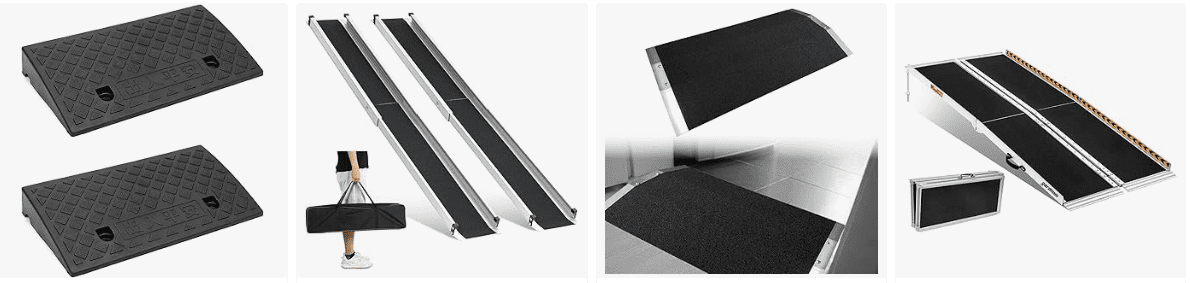
- HIGH QUALITY AND DURABLE: Our curb ramp is constructed from durable and high-quality materials. It is made of industrial-grade composite plastic materials, it can withstand great pressure, durable and long service life.
- LIGHT AND FLEXIBLE: The multi-purpose driveway ramp is surprisingly light, so it is easy to move or transport from one place to another. You can take it with you or put it in your bag and take it where you need it.

- MULTIPLE SIZES AVAILABLE: Our rubber ramps are available in three sizes to meet different threshold height requirements. This hollow ramp (100×6.5×2.5cm) combines lightweight design with a gentle slope, suitable for use as a door threshold ramp or wheelchair ramp for steps.
- SUPERIOR MATERIALS: The rubber ramp is made of premium TPE rubber, a flexible and resilient material with excellent pressure resistance and rebound performance. It withstands various environmental conditions, including freezing and moisture, and maintains stable shape even after long-term use, providing durable wheelchair ramps for doorways and general threshold solutions.

- 【Heavy Duty Materials】Our threshold ramps are made of superior high-strength rubber material, which is wear-resistant, sturdy, waterproof, aging-resistant, and built to last. With an excellent load-bearing capacity of up to 800kg (1800lbs), it can be safely used for robot vacuums, wheelchairs, scooters and walkers.
- 【Free Cutting】This 90cm-long threshold transition strip can be cut to custom-fit some narrower doorways. And the remaining part can be used as door stoppers. Notes: the threshold ramp is delivered rolled up. A slight curve or bend upon arrival is completely normal and will not affect performance. To restore its shape, simply lay it flat on a level surface and place evenly distributed weights on top. Leave it weighted overnight, and it will flatten out perfectly.

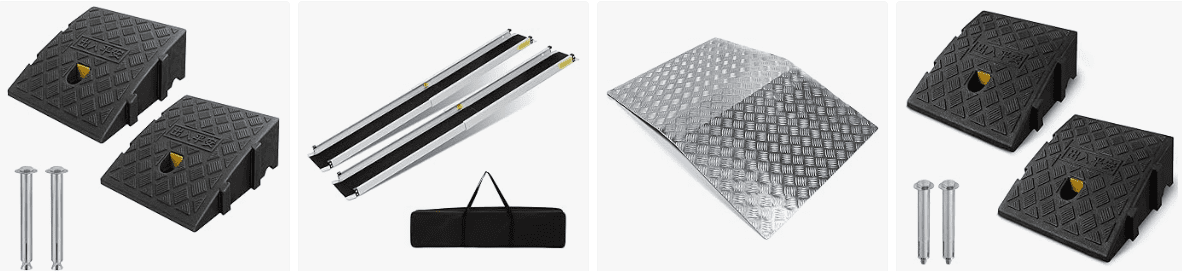
- STABILITY YOU CAN TRUST - A solid 7 kg rubber kerb ramp that stays firmly in place even under turning tyres, offering long-term grip during rain, frost and sun - exactly what homeowners expect from rubber kerb ramps for cars built for daily use.
- SMOOTH ACCESS FOR VEHICLES - Street Solutions UK Set of 2 kerb ramps for driveways for cars match standard UK kerb height to stop scraping and noise, creating a gentle slope that works as a durable curb ramp for safer, quieter driveway entry.
- [Multi-Purpose Convenience] Our 2-PC curb ramp set effortlessly accommodates sheds, lightweight vehicles, and squat-style transport, enabling smooth transitions over 4-inch steps, driveways, or door thresholds. The modular design connects in seconds for adjustable lengths, offering flexible solutions for motorcycles, wheelchairs, mobility scooters, or garden equipment. Perfect for homes, workshops, or commercial spaces needing reliable access ramps.
- [Unmatched Traction] Engineered with a high-traction rubber surface, these ramps eliminate slipping risks even in heavy rain or wet surfaces. The textured non-slip design ensures stable grip for wheeled vehicles, while the water-draining bottom channels away moisture to prevent puddling. Trust them to perform reliably outdoors, whether navigating icy paths or muddy driveways.

- VERSATILE USE: Suitable for multiple vehicles and mobility devices including cars, motorcycles, wheelchairs, bicycles, strollers, and trolleys
- PORTABLE DESIGN: Heavy-duty construction allows for easy transport and placement wherever needed for temporary or permanent accessibility solutions

- VERSATILE USE: Suitable for multiple vehicles and mobility devices including cars, motorcycles, wheelchairs, bicycles, strollers, and trolleys
- PORTABLE DESIGN: Heavy-duty construction allows for easy transport and placement wherever needed for temporary or permanent accessibility solutions

- STABILITY YOU CAN TRUST - A solid 7 kg rubber kerb ramp that stays firmly in place even under turning tyres, offering long-term grip during rain, frost and sun - exactly what homeowners expect from rubber kerb ramps for cars built for daily use.
- SMOOTH ACCESS FOR VEHICLES - Street Solutions UK Set of 4 kerb ramps for driveways for cars match standard UK kerb height to stop scraping and noise, creating a gentle slope that works as a durable curb ramp for safer, quieter driveway entry.

- 【Efficient Shock Absorption】: Wheelchair ramp is crafted from high-density PVC material, ensuring long-lasting durability. Ramps for mobility scooters minimize vibrations and noise during transit, providing a smoother and quieter passage.
- 【Dual Anti-Slip Design】: Threshold ramp incorporates vertical and horizontal anti-slip grooves for enhanced safety. Ramps for steps superior grip reduces tire slippage on steep slopes, making it ideal for vehicles, bicycles, and secure curb transitions.

- 🤝【Lightweight and flexible】 The multi-purpose driveway ramp is very light, so it is easy to move or transport from one place to another. You can take it with you or put it in a bag and take it wherever you need it. The elasticity of the rubber, the damping, and the noise reduction performance are very good, and the passing time of the product greatly weakens the impact force of the vehicle. Reduce impact, good shock absorption, and noise reduction.
- 🤝【Multipurpose】Saffory wheelchair ramps can make your life easier in many ways, sill ramps allow access to lowered cars(Vehicles weighing <2 tons), mobile wheelchairs, motorcycles, bicycles, scooters, and carts on curbs or elevated walkways, Shed ramps, low car ramps, lawn mower ramps, RV curb ramps, squat ramps. Rubber curb ramps can easily help heavy equipment climb without damaging tires or other components.