What Is The Angle For A Wheelchair Ramp
Understanding what is the angle for a wheelchair ramp is one of the most important factors when it comes to accessibility and safety. Read more
If you’re looking to buy ready-made ramps or adjustable slope ramps, click here to check the latest prices on What Is The Angle For A Wheelchair Ramp.
Why Ramp Angle Matters So Much
The angle of a wheelchair ramp isn’t just a technical number — it directly affects how safe, smooth, and practical the ramp will be for daily use. A ramp that’s too steep can make it hard for users to move without assistance, while one that’s too shallow might take up unnecessary space. Getting this right means comfort, confidence, and convenience every time the ramp is used.
- Comfort: A gentle slope reduces strain on users and caregivers.
- Safety: The correct incline prevents tipping and slipping.
- Accessibility: A well-angled ramp allows easy movement indoors and outdoors.
- Compliance: Following guidelines keeps ramps suitable for home and public use.
Ideal Ramp Angles Explained
So, what’s the best angle for a wheelchair ramp? The answer depends on the type of wheelchair and the purpose of the ramp.
Most accessibility standards recommend an incline of 1:12 for public ramps — that’s 1 inch of rise for every 12 inches of ramp length, or roughly a slope of 4.8°. For home use, where space may be limited, a steeper slope of up to 1:10 (about 5.7°) may be acceptable for short ramps.
Here’s a quick breakdown:
- 1:12 ratio (about 4.8°): Best for public buildings and most wheelchairs.
- 1:10 ratio (about 5.7°): Suitable for shorter ramps or home use.
- 1:8 ratio (about 7.1°): Recommended only for very short, portable ramps used with strong electric wheelchairs.

Remember, the flatter the slope, the easier it is to ascend and descend — especially for manual wheelchair users. If you’re unsure which ramp suits your space best, click here to check the latest prices on What Is The Angle For A Wheelchair Ramp and explore adjustable ramp options designed for different gradients.
How To Measure Ramp Angle Accurately
Calculating ramp angle is simple once you know the rise (height) and the length of the ramp. The formula is:
Angle = arctangent (rise ÷ length)
For example, if your ramp needs to rise 12 inches and is 12 feet (144 inches) long, the angle is arctangent (12 ÷ 144) = approximately 4.8°, which is perfect for most users.
Many modern wheelchair ramps come with built-in gradient indicators, or you can use an angle measuring app on your phone to double-check the slope during installation. A precise angle guarantees safety, especially for outdoor setups where rain or uneven ground can affect traction.
Portable and Adjustable Ramp Options
Adjustable and foldable ramps are now available for home and travel use, letting you choose the ideal slope for your needs. Whether you’re setting up a ramp for a front step, a car boot, or a garden path, these modern designs are lightweight, durable, and easy to store. Aluminium and rubber ramps, in particular, are popular for their grip and corrosion resistance.
- Telescopic ramps – perfect for vehicles or steps with varying heights.
- Folding ramps – easy to carry and ideal for portable use.
- Threshold ramps – great for small rises and indoor doorways.
- Rubber ramps – strong, weather-resistant, and long-lasting.

Safety Tips For Ramp Use
Even the perfect angle won’t guarantee safety unless you use the ramp correctly. Always ensure:
- The ramp surface is clean, dry, and free of debris.
- The ramp is securely placed on level ground at both ends.
- Non-slip surfaces are added for outdoor ramps.
- Weight limits are followed, especially for electric wheelchairs.
A well-installed ramp improves mobility, boosts independence, and ensures peace of mind for users and caregivers alike. Whether you’re a homeowner, carer, or business owner, knowing what is the angle for a wheelchair ramp makes all the difference in accessibility design.
Final Thoughts On Ramp Angles
The perfect ramp angle isn’t just about measurements — it’s about creating comfort and confidence for those using it. A smooth, steady incline helps users move freely and safely every day.
If you’re thinking about upgrading your ramp setup, click here to check the latest prices on What Is The Angle For A Wheelchair Ramp and find the best options for your space today.

- 【Transition Plate & Non-slip Surface】The transition plates at the bottom of this ramp enhance its fit to the ground, minimizing the risk of slips and falls. The non-slip surface provides added traction, making it safe and stable for smooth and hassle-free transitions.
- 【Easy Folding & Portable Design】With its easy folding feature, the ramp can be folded into a compact size for space-saving and easy carrying. Take it with you wherever you go, ensuring accessibility wherever you need it.

- Supportec Portable Multi Use Folding Ramp - Available in a choice of 2ft, 3ft or 5ft lengths
- Provides easy assisted access into vehicles, doorways and other thresholds - Multi purpose design suitable for a range of uses - Textured tread is suitable for most wheelchairs and four wheeled mobility scooters

- VERSATILE USE: Suitable for multiple vehicles and mobility devices including cars, motorcycles, wheelchairs, bicycles, strollers, and trolleys
- PORTABLE DESIGN: Heavy-duty construction allows for easy transport and placement wherever needed for temporary or permanent accessibility solutions

- Supportec Portable Multi Use Folding Ramp - Available in a choice of 2ft, 3ft or 5ft lengths
- Provides easy assisted access into vehicles, doorways and other thresholds - Multi purpose design suitable for a range of uses - Textured tread is suitable for most wheelchairs and four wheeled mobility scooters
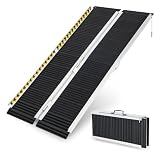
- 【Transition Plate & Non-slip Surface】The transition plates at the bottom of this ramp enhance its fit to the ground, minimizing the risk of slips and falls. The non-slip surface provides added traction, making it safe and stable for smooth and hassle-free transitions.
- 【Easy Folding & Portable Design】With its easy folding feature, the ramp can be folded into a compact size for space-saving and easy carrying. Take it with you wherever you go, ensuring accessibility wherever you need it.

- ▶2FT(61cm) Wheelchair Ramps are available for 5 cm-15 cm step heights only
- ▶ Note: Please refer to the buyer’s guide to select the wheel chair ramp for home steps size before purchasing; Please notice that it is normal for the long portable wheelchair ramp to sink during use, and it will rebound soon.Please do not exceed the maximum weight capacity of this wheelchair ramp 270 kg

- STABILITY YOU CAN TRUST - A solid 7 kg rubber kerb ramp that stays firmly in place even under turning tyres, offering long-term grip during rain, frost and sun - exactly what homeowners expect from rubber kerb ramps for cars built for daily use.
- SMOOTH ACCESS FOR VEHICLES - Street Solutions UK Set of 2 kerb ramps for driveways for cars match standard UK kerb height to stop scraping and noise, creating a gentle slope that works as a durable curb ramp for safer, quieter driveway entry.

- A pair of high-quality loading ramps.
- Made of galvanized steel and max loading to 400 kg, 200 kg per ramp.

- 3-Second Setup – No Tools, No Pins: Unlike traditional ramps that require loose pins or chains, our patented quick-lock latch lets you unfold a secure ramp in seconds—just pull apart until it clicks. Folds to a compact 60.96 cm × 36.83 cm × 5.08 cm and weighs only 5.4KG, easily fitting in your car trunk, closet, or RV storage
- 5.4KG Body,362.87KG Capacity – Aerospace Aluminum: Despite weighing just 5.44KG Body, this ramp supports a full 362.87KG. The built-in carrying handle makes it easy to move, while the high-strength aluminum frame provides exceptional strength-to-weight ratio for wheelchairs, scooters, and heavy cargo