What Is The Maximum Angle For A Wheelchair Ramp
Designing a wheelchair ramp isn’t just about putting a slope in place – Read more
Click here to check the latest prices on What Is The Maximum Angle For A Wheelchair Ramp
Why Ramp Angle Matters More Than You Think
The angle of a wheelchair ramp directly impacts how easy – or difficult – it is to use. Too steep, and users might struggle to climb it, or worse, risk tipping backwards. Too shallow, and it might take up more space than necessary. The ideal balance depends on who’s using the ramp and where it’s installed. The angle essentially controls:
- Safety: A gentler slope reduces the risk of accidents, slips, or roll-backs.
- Accessibility: Proper incline ensures that users with manual wheelchairs or lower strength can navigate independently.
- Compliance: Meeting recommended gradient standards helps you follow accessibility laws and building codes.
- Comfort: A comfortable angle reduces strain on both the wheelchair user and any carer pushing the chair.
Recommended Maximum Angles: A Quick Guide
There isn’t a one-size-fits-all solution. The recommended maximum angle for a wheelchair ramp depends on how and where it’s used. Here’s a simple breakdown:

- Public Access Ramps: Around 1:12 gradient (approx. 4.8°). This means 1 inch of rise per 12 inches of ramp length.
- Residential Ramps: Up to 1:8 gradient (approx. 7°) is often considered acceptable for shorter, private ramps.
- Portable or Temporary Ramps: Can go as steep as 1:6 (approx. 9.5°) for very short rises and strong users, but this is not recommended for regular use.
In simple terms, the maximum safe angle is usually around 4.8° to 7° for most wheelchair users. Anything steeper than this can quickly become unsafe, especially without assistance.
How to Calculate the Right Angle for Your Ramp
Thankfully, calculating the ideal ramp angle isn’t complicated. A basic rule of thumb is:
- For every 1 inch of vertical rise, allow at least 12 inches of ramp length for public use.
- For residential use, you can reduce that to around 8 inches of ramp length for every 1 inch of rise.
For example, if you’re building a ramp for a 24-inch rise, you’d need:
- Public use: 24 x 12 = 288 inches (24 feet) of ramp length.
- Private use: 24 x 8 = 192 inches (16 feet) of ramp length.
Always round up rather than down – a slightly shallower ramp is far better than one that’s too steep.
Click here to check the latest prices on What Is The Maximum Angle For A Wheelchair Ramp
Other Key Factors to Consider

While the angle is critical, there are a few other things to keep in mind when choosing or designing a wheelchair ramp:
- Surface Grip: Non-slip materials make ramps safer, especially in wet conditions.
- Handrails: Adding handrails can make steeper ramps easier and safer to use.
- Landings: Long ramps should have flat landings for rest and safety.
- Space Constraints: Plan the ramp’s angle based on the available space and the type of wheelchair in use.
Real-Life Benefits of the Right Ramp Angle
Getting the ramp angle right isn’t just about compliance – it transforms lives. A correctly built ramp means:
- People can enter and exit their homes independently.
- Carers and family members won’t strain when pushing wheelchairs.
- Mobility aids last longer because they’re not subjected to steep inclines.
- Overall safety, confidence, and quality of life improve significantly.
In short, choosing the correct maximum angle for a wheelchair ramp is about more than just numbers – it’s about dignity, independence, and safety.
Final Thoughts: Small Angle, Big Difference
Whether you’re installing a ramp at home, in a public building, or using a portable solution, understanding the maximum angle for a wheelchair ramp is crucial. Sticking to recommended gradients ensures that everyone – regardless of mobility level – can move safely and confidently. It’s one of those small details that has a massive impact on accessibility.
Click here to check the latest prices on What Is The Maximum Angle For A Wheelchair Ramp

- STABILITY YOU CAN TRUST - A solid 7 kg rubber kerb ramp that stays firmly in place even under turning tyres, offering long-term grip during rain, frost and sun - exactly what homeowners expect from rubber kerb ramps for cars built for daily use.
- SMOOTH ACCESS FOR VEHICLES - Street Solutions UK Set of 2 kerb ramps for driveways for cars match standard UK kerb height to stop scraping and noise, creating a gentle slope that works as a durable curb ramp for safer, quieter driveway entry.

- 🤝【Lightweight and flexible】 The multi-purpose driveway ramp is very light, so it is easy to move or transport from one place to another. You can take it with you or put it in a bag and take it wherever you need it. The elasticity of the rubber, the damping, and the noise reduction performance are very good, and the passing time of the product greatly weakens the impact force of the vehicle. Reduce impact, good shock absorption, and noise reduction.
- 🤝【Multipurpose】Saffory wheelchair ramps can make your life easier in many ways, sill ramps allow access to lowered cars(Vehicles weighing <2 tons), mobile wheelchairs, motorcycles, bicycles, scooters, and carts on curbs or elevated walkways, Shed ramps, low car ramps, lawn mower ramps, RV curb ramps, squat ramps. Rubber curb ramps can easily help heavy equipment climb without damaging tires or other components.

- STABILITY YOU CAN TRUST - A solid 10 kg rubber kerb ramp that stays firmly in place even under turning tyres, offering long-term grip during rain, frost and sun - exactly what homeowners expect from rubber kerb ramps for cars built for daily use.
- SMOOTH ACCESS FOR VEHICLES - Street Solutions UK Set of 2 kerb ramps for driveways for cars match standard UK kerb height to stop scraping and noise, creating a gentle slope that works as a durable curb ramp for safer, quieter driveway entry.

- Supportec Portable Multi Use Folding Ramp - Available in a choice of 2ft, 3ft or 5ft lengths
- Provides easy assisted access into vehicles, doorways and other thresholds - Multi purpose design suitable for a range of uses - Textured tread is suitable for most wheelchairs and four wheeled mobility scooters

- Supportec Portable Multi Use Folding Ramp - Available in a choice of 2ft, 3ft or 5ft lengths
- Provides easy assisted access into vehicles, doorways and other thresholds - Multi purpose design suitable for a range of uses - Textured tread is suitable for most wheelchairs and four wheeled mobility scooters

- Supportec Portable Multi Use Folding Ramp - Available in a choice of 2ft, 3ft or 5ft lengths
- Provides easy assisted access into vehicles, doorways and other thresholds - Multi purpose design suitable for a range of uses - Textured tread is suitable for most wheelchairs and four wheeled mobility scooters

- 【Transition Plate & Non-slip Surface】The transition plates at the bottom of this ramp enhance its fit to the ground, minimizing the risk of slips and falls. The non-slip surface provides added traction, making it safe and stable for smooth and hassle-free transitions.
- 【Easy Folding & Portable Design】With its easy folding feature, the ramp can be folded into a compact size for space-saving and easy carrying. Take it with you wherever you go, ensuring accessibility wherever you need it.

- ▶2FT(61cm) Wheelchair Ramps are available for 5 cm-15 cm step heights only
- ▶ Note: Please refer to the buyer’s guide to select the wheel chair ramp for home steps size before purchasing; Please notice that it is normal for the long portable wheelchair ramp to sink during use, and it will rebound soon.Please do not exceed the maximum weight capacity of this wheelchair ramp 270 kg
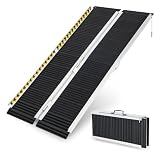
- 【Transition Plate & Non-slip Surface】The transition plates at the bottom of this ramp enhance its fit to the ground, minimizing the risk of slips and falls. The non-slip surface provides added traction, making it safe and stable for smooth and hassle-free transitions.
- 【Easy Folding & Portable Design】With its easy folding feature, the ramp can be folded into a compact size for space-saving and easy carrying. Take it with you wherever you go, ensuring accessibility wherever you need it.