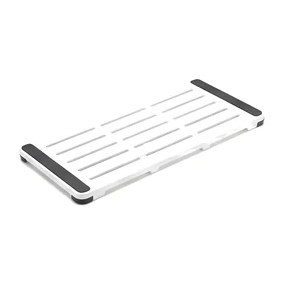
Homecraft Savanah Slatted Bath Board
White slatted board about 71 cm by 35 cm, so water drains through rather than pooling under the user. Adjustable brackets hold it across the bath.
A bath board rests across the top of the bath so you can sit on it, swing your legs over the side and wash while seated, without climbing in or getting down to the bottom of the bath. It is a low cost way to keep using a bath, and the key checks are the fit across your bath, the user’s weight and whether a handle will help.
The board sits on both rims of the bath, held in place by adjustable brackets underneath that grip the inside edges. The user sits on the board from outside the bath, then lifts one leg at a time over the side and shuffles to the middle. Most people then shower using a hand-held head, or lower themselves onto a bath seat if they want to sit in the water. Getting out is the same movement in reverse.
A bath board for elderly users suits people who can sit safely and lift their legs over the bath side with little help, but who struggle to step in or to stand up from the bottom of the bath. It is less suitable if the user cannot balance when seated, cannot lift their legs, or needs to sit low in the water. In those cases a bath lift or a walk-in shower may work better, and an occupational therapist can advise.
Slatted boards let water drain through, so the user does not sit in a puddle, and the gaps give some grip. Solid boards are smoother and easier to wipe, and some have drainage holes or a textured surface instead. Both types come in different lengths, so measure your bath first.
A bath board with handle gives something to hold when shuffling along and when pushing up to stand. Many people find it reassuring. The handle should be on the side that suits the user’s stronger hand, and some boards let you fit it either way round. Check the handle does not get in the way of the taps.
| Measurement | Where to Take It | Why It Matters |
|---|---|---|
| Outside width | Across the top from outer rim to outer rim | The board must be long enough to rest on both rims |
| Inside width | Between the inner edges at the top | The brackets must adjust to this width |
| Rim width | Across the flat top of each rim | Narrow or sloping rims can make a board unstable |
Corner baths, very wide baths and baths with sloping rims may not suit a standard board. If yours is unusual, ask an occupational therapist or the seller before ordering.
A transfer bench stands on legs, with two inside the bath and two outside, so the user sits down outside the bath before sliding across. It is more stable for people who find lifting their legs onto a board hard, but it takes up more space. A board is lighter, quicker to lift off for others to use the bath, and usually costs less.
Most boards fit without tools. Turn the board over, loosen the brackets underneath, then set it across the bath and slide the brackets out until they sit snugly against the inside edges on both sides. Tighten them so the board cannot slip sideways, then press down on each end to check it does not rock. The board should sit square across the bath, usually nearer the taps end so the user can face the shower. If more than one person uses the bath, the board lifts straight off, though it helps to store it somewhere dry where it will not be knocked out of adjustment.
A board works best alongside a few small aids. A grab rail on the wall beside the bath gives a firm hold when sitting down and standing up. A long handled sponge lets the user wash the legs and feet without leaning forward. A hand-held shower head on a slide rail is almost essential, as it lets the user wash while seated. If getting the legs over the side becomes difficult, a leg lifter strap or a swivel seat can help, and an occupational therapist can review what else might be needed.
For more ideas see our bathroom aids guide, the accessible bathroom guide and our page on a portable shower for elderly people.
The boards below were in stock when we checked each listing. Compare the length and bracket range with your bath.
Often, yes. Councils and NHS community teams lend these boards after an occupational therapist assessment, and you can ask for a needs assessment from social services.
It varies by model, from around 130 kg to more than 190 kg on heavy duty boards. Check the listed limit and leave some margin.
Yes. Some people sit on the board and then lower themselves onto a seat that hangs inside the bath, which makes it easier to get back up.
Usually, as long as the rims are firm and flat. Very flexible acrylic baths may move under the brackets, so check yours feels solid.
Wipe it down with warm soapy water after use and let it dry fully. Slatted boards need the gaps cleaning now and then, as soap can build up between the slats and turn slippery.
White slatted board about 71 cm by 35 cm, so water drains through rather than pooling under the user. Adjustable brackets hold it across the bath.
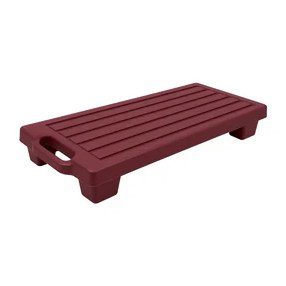
A board with a built-in handle to hold when shuffling across and standing up. A good pick for people who want something firm to push from.
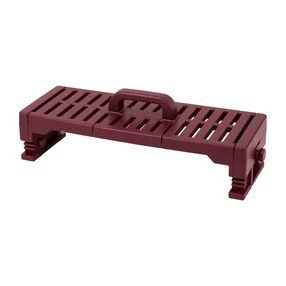
White plastic board with a handle, from a long-running UK maker of daily living aids. Light enough to lift off the bath when others want to use it.
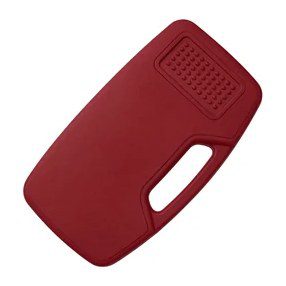
Plastic board with a handle and locking feet that help hold it steady across the bath. Also sold for use over a shower tray.
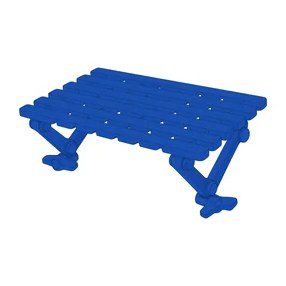
A longer slatted board of about 71 cm for wider baths. Check the bracket range against the inside width of your bath before ordering.
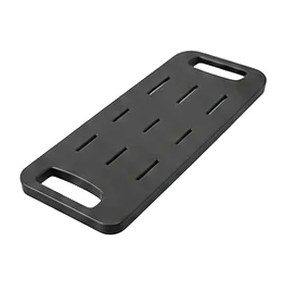
Lightweight but sold as heavy duty, with adjustable brackets and a grab handle. Useful if the board will be lifted on and off often.
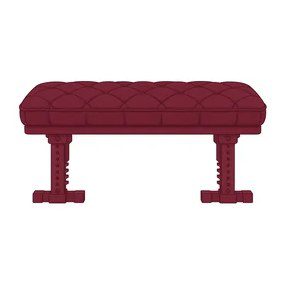
Suits people with sensitive skin or little padding who find hard plastic seats uncomfortable.
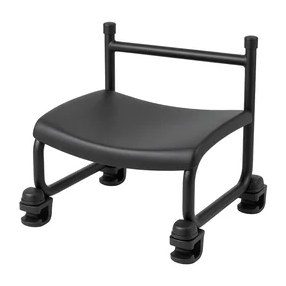
Suits carers who need a strong but light frame that resists rust in a damp bathroom.
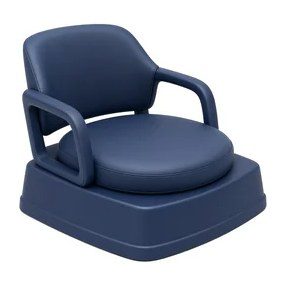
Suits people who struggle to turn on a seat, as the swivel helps them face forwards safely.
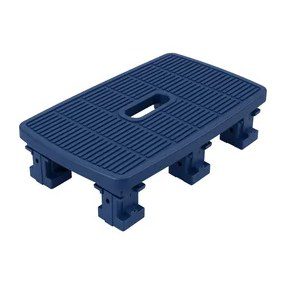
A wider, stronger seat for heavier users who need extra support across the bath.