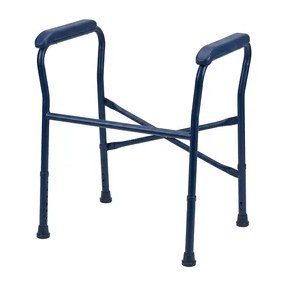
KMINA Toilet Frame
A white height-adjustable frame that stands around the pan. One of the more expensive frames here, aimed at people who want a solid, plain design.
A toilet frame is a freestanding metal surround with armrests that sits around the toilet, giving firm handholds on both sides for sitting down and standing up. It needs no drilling, so it suits rented homes and bathrooms where wall rails will not fit, and some versions come with a raised seat built in.
When you sit down or stand up from a toilet, most of the effort goes through the thighs. Armrests let you share that effort with your arms, pushing down on both sides as you rise and lowering yourself under control. A frame gives that support on both sides at once, which a single wall rail cannot. Most frames have adjustable legs so the arm height suits the user, and rubber feet that grip the floor.
| Type | Description | Points to Weigh Up |
|---|---|---|
| Freestanding frame | Four legs with arms, stands around the pan | No fixing; can be moved for cleaning |
| Frame fixed under the seat | Arms bolted under the toilet seat hinges | Compact and steady; fits fewer toilet types |
| Toilet frame with seat | Frame and raised seat built together | Raises height and adds arms together |
| Folding frame | Arms or the whole frame fold for storage | Good for shared bathrooms and travel |
Arm height comes first. With the user sitting, the arms should be at a height where the elbows bend slightly as the hands rest on them. Then check the width between the arms. It needs to clear the hips with a little room, but not be so wide that the user has to reach out sideways. Padded armrests are kinder on the hands, while plain plastic grips are easier to clean.
Stability matters most. Look for a wide base, cross bracing between the legs and rubber feet in good condition. Rock the frame firmly before first use, and recheck the leg buttons and bolts each week.
A frame with a built-in seat solves two problems at once: it raises the height and adds arms. It suits people who struggle both with a low toilet and with getting up. The seat usually sits over the existing pan with a splash guard. A separate frame and raised seat let you adjust each part independently and replace one without the other. If you only need extra height, a raised seat alone may be enough.
Measure the width across the pan at its widest point, the distance from the wall to the front of the pan, and any gap needed for a cistern, pipes or a pedestal basin nearby. The frame legs must stand flat on the floor without catching the pan base or a pipe. Back-to-wall toilets and close-coupled cisterns are usually fine, but a toilet squeezed between a wall and a basin may not leave room for the legs.
Wall-fixed rails take up less space and feel very solid when fitted into a sound wall. A frame suits rented homes, tiled walls you do not want to drill, and toilets with no wall nearby. Many bathrooms end up with a frame for the short term and rails once a longer-term plan is in place. Our grab rails guide covers wall-fixed options.
Standard frames list a maximum user weight on each listing, and heavy-duty versions use thicker tubing, wider arm spacing and extra bracing. Larger users should measure hip width when seated and choose a frame with room either side, because arms that press on the hips make sitting uncomfortable and can push the frame out of line. A heavy-duty frame is also worth considering for anyone who drops onto the seat rather than lowering slowly, as that puts sudden load on the legs.
Frames sit right beside the pan, so they need regular cleaning. Wipe the arms daily with a bathroom cleaner and lift the frame away once a week to clean the floor and the base of the toilet underneath. Check the rubber feet at the same time, since grime under the feet can make them slip. Padded arms need extra care around the seams.
Occupational therapists often supply frames on loan through community equipment services, especially after surgery. The bathroom aids guide explains other equipment you might be offered.
The frames below cover freestanding, folding and seat-and-frame designs that were in stock when we checked each listing.
Freestanding frames do not. Some models offer optional floor fixings for extra stability, which may help heavier users.
Some can, but many commodes already have arms. Check the measurements before combining them.
Yes. A frame leaves the toilet usable for others, and folding models move out of the way.
Often, after an occupational therapy assessment arranged by your GP, hospital team or council.
Wide enough to clear the pan and the user’s hips with a little room either side. Measure across the widest part of the toilet and across the user’s hips when seated, then compare both figures with the frame’s inner width range before ordering.
A white height-adjustable frame that stands around the pan. One of the more expensive frames here, aimed at people who want a solid, plain design.
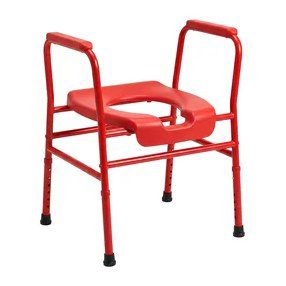
Raised seat and frame in one, sold pre-assembled in a standard width. It suits someone who needs both extra height and arms to push from.
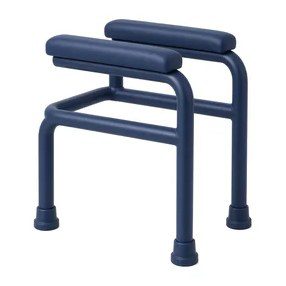
Free-standing surround with height and width adjustment and non-slip feet. It arrives pre-assembled, so it is ready to use straight away.
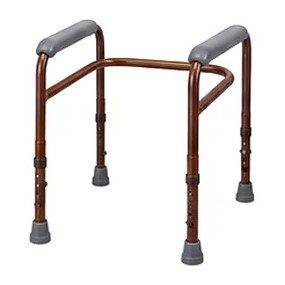
A height-adjustable surround from a long-running UK care supplier. Simple and light enough to move between bathrooms.
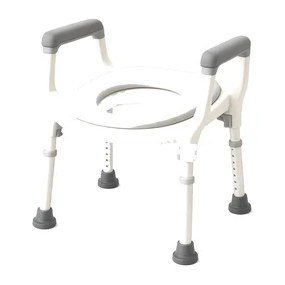
Combines a raised seat with integral armrests, adjusting for height and width on non-slip ferrules. A good all-in-one choice after hip surgery.
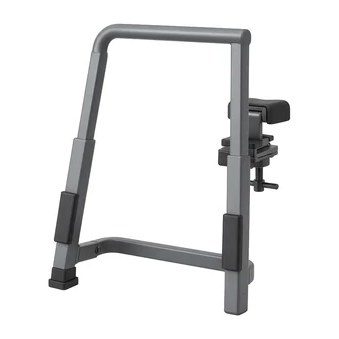
Clamps around the toilet with padded protection on the contact points, so the frame stays put when weight goes through one arm.
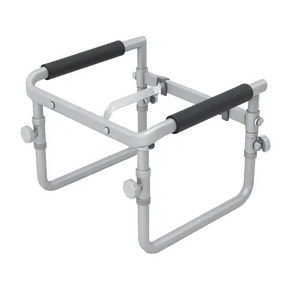
Adjustable frame with non-slip grips on the arms. A lower-cost option for a straightforward surround.
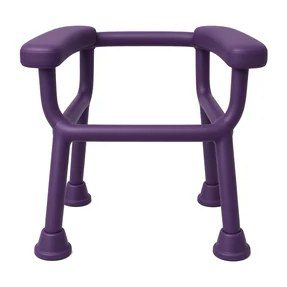
Both the height and width adjust, which helps where the pan sits close to a wall or basin.
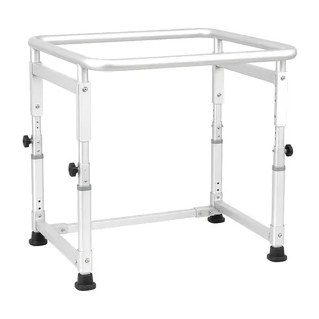
Lightweight aluminium surround with height adjustment. Easy to lift out for cleaning around the toilet.
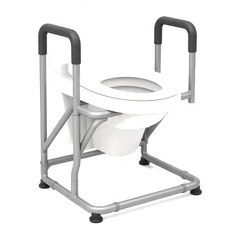
Fully adjustable frame with a raised seat and arms that can also stand on its own away from the toilet. Flexible for a home where needs may change.