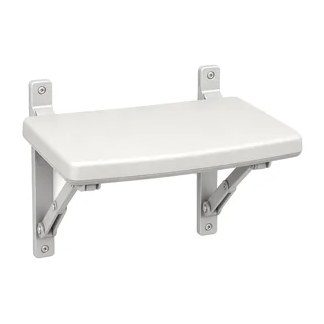
FreeTec Wall Mounted Folding Shower Seat
A simple fold-up seat that sits flat against the wall when not needed. A good starting point for a small shower where floor space matters.
A wall mounted shower seat is a fold-down seat fixed to the shower wall, giving a firm place to sit while washing and folding flat out of the way for anyone who prefers to stand. It suits shared bathrooms and small showers where a freestanding chair would be in the way, but it needs a solid wall and careful fitting.
A freestanding chair takes floor space all the time. A seat on the wall folds up when not needed, keeps the tray clear for cleaning and does not move about on a wet floor. Because it is bolted to the structure, it often feels steadier than a stool, and some models carry higher weights. The trade-off is that it cannot be moved to suit a different user, and it relies entirely on the wall it is fixed to.
| Type | Description | Suits |
|---|---|---|
| Compact flip-up seat | Small padded or slatted seat on a wall bracket | Small showers and occasional use |
| Seat with support legs | Fold-down legs reach the floor for extra support | Plasterboard walls and heavier users |
| Seat with back and arms | Fold-down seat plus backrest and flip-up arms | Users who need support to sit and stand |
| Shower bench | Longer fold-down seat, often teak or slatted plastic | Wet rooms and walk-in showers |
Legs carry part of the load to the floor, so less force goes through the wall fixings. They help on plasterboard or stud walls where fixings cannot reach a solid structure everywhere, and for heavier users. The legs fold up with the seat. Check that the leg feet sit flat on your tray or floor and do not land on the drain or a slope.
If you are unsure about the wall, ask a qualified fitter. A council adaptations team or the occupational therapist who assessed you can often arrange fitting, and larger bathroom changes may be covered by a Disabled Facilities Grant.
Place the seat where the user can reach the shower controls and a hand-held head while sitting, and where there is space beside it for a carer if needed. A wider seat is steadier, but it must fold flat without hitting the shower door or screen. Fit a grab rail beside the seat to help with sitting and standing; our grab rails guide covers positions and fixing.
Slatted plastic seats drain quickly and are easy to clean. Padded seats are warmer and softer but need wiping to stop mould around seams. Teak and other hardwoods look good and feel warm, but they need oiling now and then. Frames are usually stainless steel or powder-coated aluminium, both of which resist rust better than plain steel.
People who get tired standing, who have balance problems on wet floors or who are recovering from surgery often find a fixed seat makes showering far less stressful. It is also popular in family bathrooms, because the seat flips up and the shower looks and works as normal for everyone else. Carers like it because the user sits at a predictable height and position, which makes washing hair and feet easier to help with. Someone who needs to be wheeled in and out, or who cannot sit up without support, will usually need a shower chair with a back and arms or a wheeled shower commode instead.
Rinse soap off after each use and fold the seat up so it dries. Check the hinge and fixings every month or two, and tighten anything that has worked loose. If the seat starts to drop or wobble when you sit, stop using it until the fixings have been checked, as the wall plugs may have loosened in wet tiles.
A fold-down seat works best as part of a wider plan: a level-access tray or wet-room floor, a thermostatic shower, a slide rail and good rails. The wheelchair accessible bathroom guide covers the layout in more depth.
The seats below are wall-fixed designs that were in stock when we checked each listing.
Only with fixings into studs or a backing board, or with a model that has support legs. Plain plasterboard plugs will not hold.
Usually around 45 cm to 50 cm from the floor, adjusted so the user sits with feet flat and knees level with the hips.
Often, when fitted to a solid wall. Check the listed maximum user weight and the fixing guidance for your wall type.
Many people do on solid walls. If the wall is hollow or you are unsure, use a qualified fitter.
A simple fold-up seat that sits flat against the wall when not needed. A good starting point for a small shower where floor space matters.
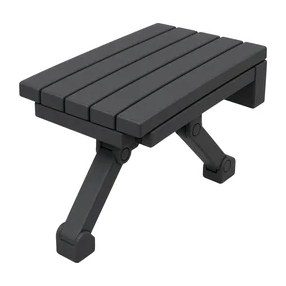
Wall mounted seat from a UK bathroom brand, listed for users up to 160 kg. The plain design is easy to wipe clean.
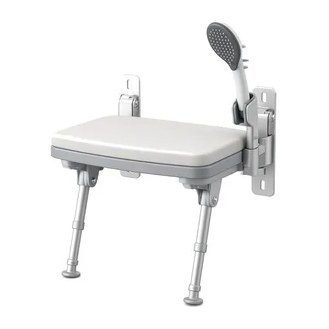
Adjustable legs take some of the load off the wall, and it comes with a shower head holder. Useful where the wall is sound but not ideal.
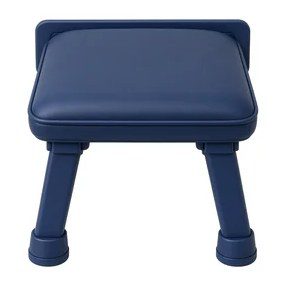
A care-supplier seat with support legs that fold away with it. A sensible choice when the wall fixings alone feel like a risk.
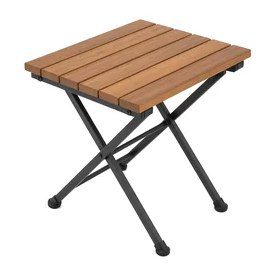
Teak looks less clinical than white plastic and copes well with water. Expect to pay more than for the plastic seats here.
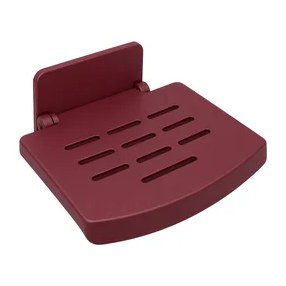
Very slim when folded and listed for users up to 180 kg, with an anti-slip seat. It suits narrow cubicles where a bulky seat would get in the way.
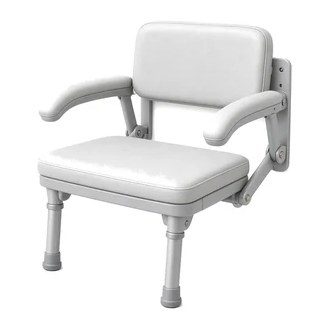
Padded seat, backrest and arms with support legs, all folding flat to the wall. The best fit here for someone who needs to lean back and push up from armrests.
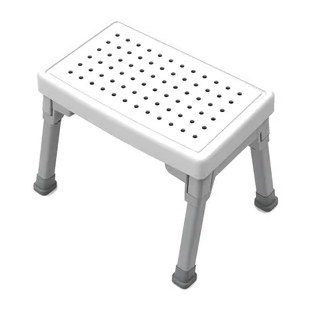
A plastic bench seat about 40 cm by 38 cm, listed for users up to 227 kg. Good value if you just need a plain, sturdy perch.
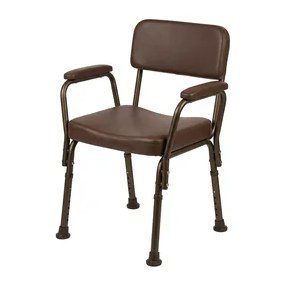
Fold-down seat with a padded seat, back and arms plus support legs. A comfortable option for longer showers.
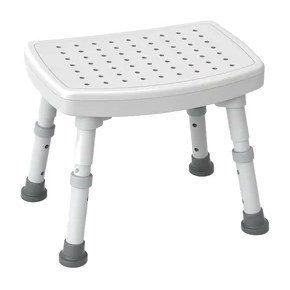
The legs adjust so the seat sits level on an uneven tray, and it is listed for users up to 181 kg.