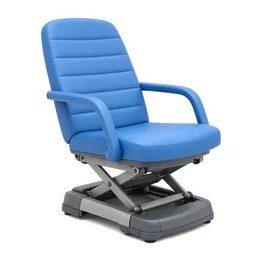
Drive Bellavita Reclining Bath Lift
Lightweight reclining lift whose seat drops to about 6 cm from the bath floor and rises to 48 cm for level transfers. Lithium battery in the handset.
A bath lift is a powered seat that lowers you into the bath and raises you back up at the press of a button, so you can soak in the water without climbing in and out. The main choices are a reclining or upright seat lift, an inflatable cushion lift and a fixed bath hoist, and each suits a different bath, user and budget.
Most lifts sit inside the bath on suction feet. You sit on the seat at rim height, swing your legs over the side, then use a waterproof hand control to lower the seat towards the bottom of the bath. To get out, the seat rises back to the rim. A rechargeable battery powers the motor, and most models will not start lowering unless the battery holds enough charge to lift you out again.
No fixing is needed for the freestanding types, so they can be lifted out when someone else wants a normal bath. The heaviest part is usually the seat base, so check the separate weights on the listing if a carer will be moving it.
| Type | How It Works | Points to Weigh Up |
|---|---|---|
| Reclining seat lift | Battery-powered seat with a backrest that tilts back as it lowers | Most popular; lets you lie back in the water |
| Upright seat lift | Fixed backrest, often lighter and narrower | Suits shorter baths and people who prefer to sit upright |
| Inflatable cushion lift | Air cushion inflated by a compressor lifts you up and down | Very low when deflated, folds small, needs a compressor nearby |
| Fixed bath hoist | Seat on a pillar or arm fitted beside or to the bath | Higher weight capacities; needs installation |
For most homes a reclining seat lift is the practical starting point. Inflatable lifts appeal to people who want to sit lower in the water, and fixed hoists usually come after an assessment for someone who cannot transfer from the rim at all.
Measure before you buy. You need the internal width at the base and at the rim, the length of the flat floor area, and whether there is a slope, grab handle or moulded seat in the way. Suction feet need a smooth, flat surface, so heavily textured or very curved baths can be a problem. Corner baths and some whirlpool or narrow tapered baths will not take a standard lift.
Also check where the side flaps land. Most seats have side flaps that rest on the bath floor or sides, and the backrest needs clearance from the taps when it reclines.
Often, yes, through your local council or community equipment service rather than your GP. An occupational therapist assesses how you manage at home and decides whether a lift, a bath board or seat or another solution fits best. You can ask your council for a needs assessment. Waiting times vary, which is why many people buy privately, and equipment provided on loan normally goes back when it is no longer needed.
Prices depend on type and brand. Simple upright lifts sit at the lower end, reclining models with longer backrests and padded covers cost more, and inflatable lifts and fixed hoists are usually the most expensive. Disabled buyers can normally claim VAT relief on a lift bought for their own use, which makes a real difference at this price level. Prices change often, so look at each listing on the day, and include spares such as a second battery or replacement covers in your budget.
A bath hoist is a fixed or mobile seat that lifts a person over the rim and lowers them in, while a seat lift sits inside the bath and needs the user to slide across from the rim. Hoists are chosen when someone cannot sit on the rim and swing their legs over, or when a carer needs to do most of the work. They need more space, often a professional fitting and sometimes structural checks, so they are usually arranged after an occupational therapy visit. Larger home adaptations may qualify for a Disabled Facilities Grant.
An inflatable bath lift is a cushion that fills with air from a small compressor to raise you to rim height, then deflates to lower you to the bottom of the bath. It sits lower than a seat lift, so you get more water around you, and it packs into a bag for travel. The compressor sits outside the bath and needs a safe place to stand. Inflatable models are pricier than most seat lifts and the cushion needs care to avoid punctures.
Every lift lists a maximum user weight. Choose one with a comfortable margin above the user’s weight rather than one right at the limit. Charge the battery after every bath, keep the hand control dry when not in use and replace worn suction cups, because a lift that slips is a real hazard. Battery packs wear out after a few years, so note the model number for spares.
The lifts below cover reclining seat lifts and a portable lifting seat that were in stock when we checked. Inflatable cushion lifts were unavailable at the time.
Many people do, once they can manage the sideways move onto the seat at rim height. If you need help with that move, a carer should be present.
Freestanding seat lifts and inflatable lifts do not. They rest on suction feet or the bath floor and can be lifted out. Fixed hoists need installing.
A full charge usually covers several baths, but charge it after each use. The lift will not lower you if the charge is too low to raise you again.
Sometimes. Many shower baths are wider at one end and taper at the other, so measure the flat floor area carefully and check the listing for compatibility.
Lightweight reclining lift whose seat drops to about 6 cm from the bath floor and rises to 48 cm for level transfers. Lithium battery in the handset.
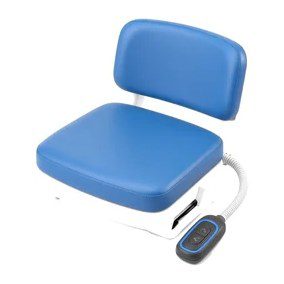
Newer Bellavita model with a simple handheld control for raising and lowering, supplied with classic blue covers.
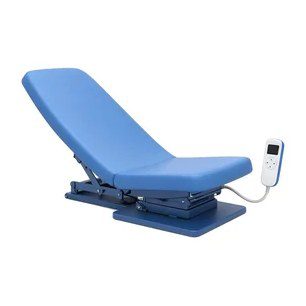
Reclining lift that splits into two main parts for lifting out, with a stable base plate and a quick-charging lithium handset.
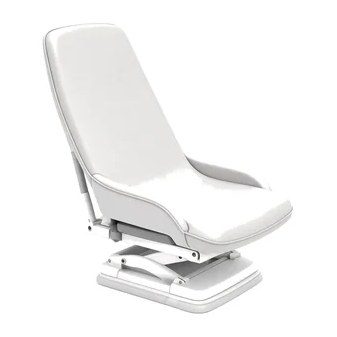
Lower-cost Kanjo reclining model with a low seat travel for deeper water, listed for users up to 140 kg.
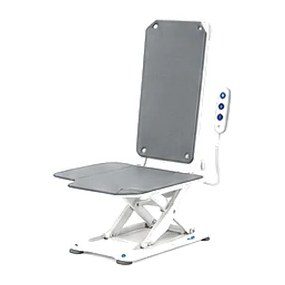
Reclining lift with an antibacterial surface on the seat and backrest, listed for users up to 140 kg.
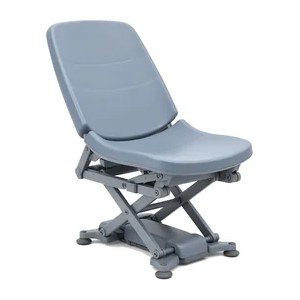
Heavy-duty version listed for users up to 170 kg, with a reclining backrest and a wider seat.
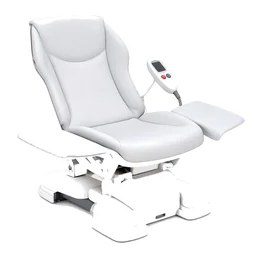
Lightweight reclining lift with side flaps for easier transfers and an emergency stop function on the controls.
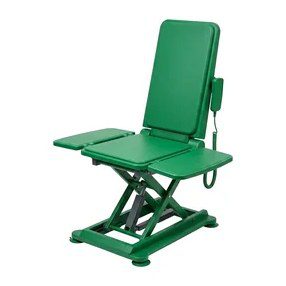
Waterproof lift with a floating remote that separates into two parts for carrying. A long-running design familiar to many therapists.
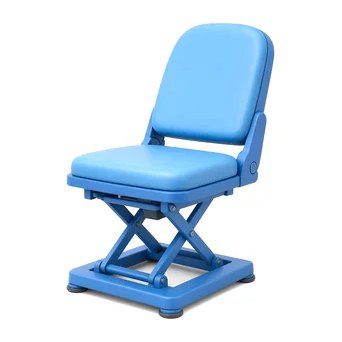
Remote-controlled lift with a seat that travels from about 6 cm to 48 cm and a reclining back. Listed for users up to 136 kg.
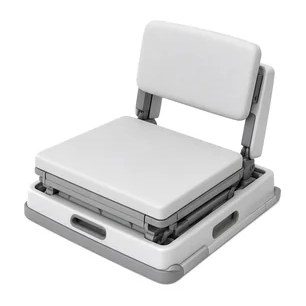
Foldable 8.6 kg lifting seat with a 60 cm by 41 cm base, listed for users up to 150 kg. Works in the bath or on the floor.