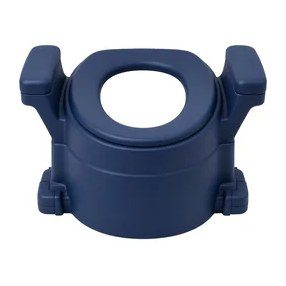
NRS Linton Plus Raised Toilet Seat
Moulded 100 mm riser with cut-outs at the front and rear for easier cleaning, a gentle front-to-back slope and two adjustable brackets plus a front lip to hold it on the pan.
A raised toilet seat sits on top of the existing toilet pan and adds height, so sitting down and standing up take less effort from the hips and knees. Models differ in height, fixing method and whether they have a lid or built-in handles, and the right one depends on the user and the shape of the toilet.
A riser helps anyone who finds a standard toilet too low: people with stiff or painful hips and knees, those recovering from hip or knee surgery, taller users and many older people whose leg strength has dropped. It suits someone who can still walk to the toilet and turn to sit, but needs less of a deep bend to get there.
It is not a full answer for someone who cannot get to the bathroom in time or who needs to be transferred sideways. A commode, a toilet frame or a wheeled shower commode may suit those situations better.
Most raisers add between about 5 cm and 15 cm. Aim for a height where the user sits with feet flat on the floor and knees level with or slightly below the hips. Measure from the floor to the knee crease when they sit in a comfortable chair, then subtract the height of the toilet rim. That gap is roughly the lift you need.
After hip replacement surgery the hospital team usually advises a specific height for a few weeks, to stop the hip bending too far. Follow that advice rather than a general rule, and check the NHS hip replacement recovery guide for what to expect at home.
| Type | Fixing | Points to Know |
|---|---|---|
| Basic moulded riser | Sits on the pan, held by side brackets or a lip | Light and easy to clean; no lid |
| Riser with lid | Clamps or brackets | Looks more like a normal seat and closes for flushing |
| Riser with handles or arms | Clamps to the pan; arms attach to the seat | Gives something to push on when no wall rail is fitted |
| Hinged or tilting riser | Brackets fixed under the existing seat hinges | Lifts up out of the way for other users |
| Padded or soft riser | Brackets or clamps | Warmer and softer for long sits; harder to clean |
Built-in handles give a firm place to push down when standing up and to steady yourself when sitting. They help most when there is no wall-mounted grab rail beside the toilet, or when the toilet sits in the middle of a wall with nothing to reach for. Check that the arms do not block a sideways move from a wheelchair, and that the clamps hold firmly on your pan, because handles put more force through the fixings than a plain seat. If you need full arm support on both sides, a freestanding frame around the toilet may be the better choice, and our grab rails guide covers wall-fixed options.
A lid makes the riser look more like a normal seat, keeps the bathroom tidier and lets you close it before flushing. It also gives a flat surface to rest on for a moment. The downside is an extra hinge to clean around and, on some models, a slightly bulkier shape. Basic lidless risers are lighter, cheaper and easier to lift off, which helps if the riser is only used by one person in a shared bathroom and comes off between uses.
Most risers fit standard round or slightly oval pans. Measure the inside length and width of the pan opening, and check for features that cause trouble: very elongated pans, back-to-wall toilets with no hinge access, soft-close seats that are hard to remove and close-coupled cisterns sitting low over the seat. Many risers need the existing seat taken off, so check you can do that on yours.
If the user can reach the toilet reliably, a riser is simpler and keeps them using the bathroom as normal. If night-time trips or urgency are the problem, a bedside commode is the safer choice. Three-in-one commodes bridge the two by standing over the toilet in the day and beside the bed at night.
Occupational therapists can supply risers on loan, especially after surgery, through the local community equipment service. The bathroom aids guide explains other equipment they may suggest.
The seats below cover basic, lidded and handled designs that were in stock when we checked each listing.
No. They suit most standard pans, but elongated, back-to-wall and some designer toilets can be a problem, so measure first.
Often, yes, after an occupational therapy assessment, especially before or after hip and knee surgery.
Yes, though some family members may find it too high. A hinged design that lifts out of the way helps in shared bathrooms.
A little. Padded covers need wiping carefully around the seams, so hard plastic is easier where hygiene is the main concern.
Moulded 100 mm riser with cut-outs at the front and rear for easier cleaning, a gentle front-to-back slope and two adjustable brackets plus a front lip to hold it on the pan.
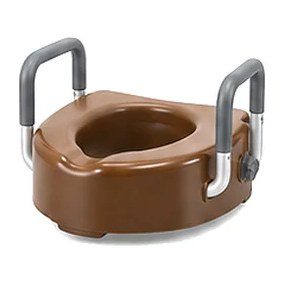
Lightweight plastic riser that adds about 10 cm, with a lid, a seat that slopes slightly towards the front and L-shaped brackets that adjust to the pan.
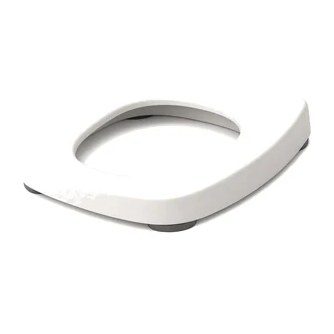
Shallow 50 mm version without a lid, for someone who needs only a little extra height. Fully sealed plastic that wipes clean.
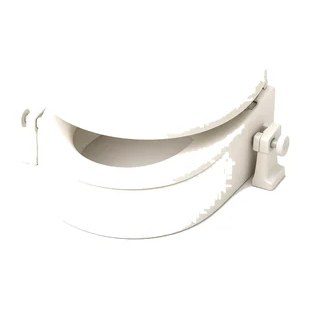
Taller riser of about 15 cm with a lid and two rear locking clamps that tighten onto most standard pans.
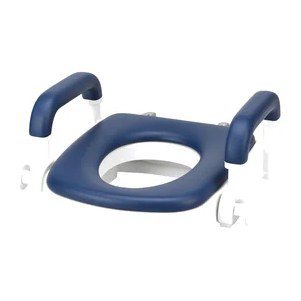
Adds about 10 cm and has foam-padded arms to push on, fixed with two hand-tightened side attachments rather than tools.
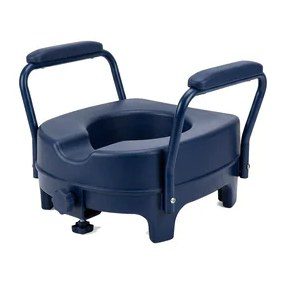
Widened riser that lifts the seat by about 10 cm, with padded handles on both sides for people who have no wall rail nearby.
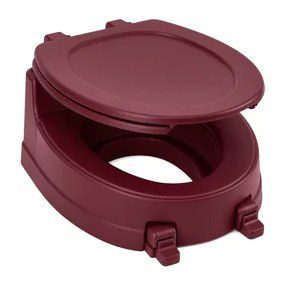
Riser of about 15 cm with its own seat and lid, held by twin locking knobs on screw rods that grip the inside of the pan.
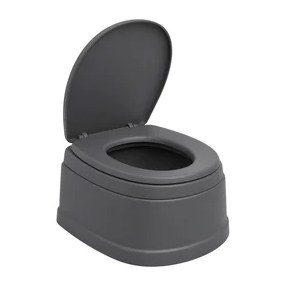
Lower riser of about 7.5 cm that looks much like an ordinary seat, with a slow-closing lid that lowers quietly.
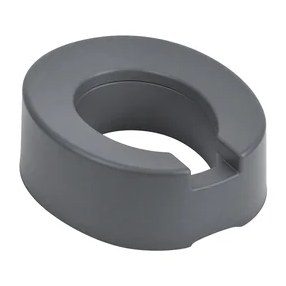
Plain 10 cm riser with two side twist clamps, aimed at people who find a standard pan too low after hip or knee problems.
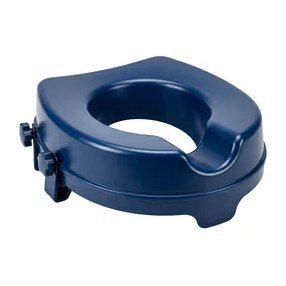
Push-on riser without a lid that adds about 10 cm. The same range comes in other heights and with a lid, so it is easy to swap if the first choice is wrong.