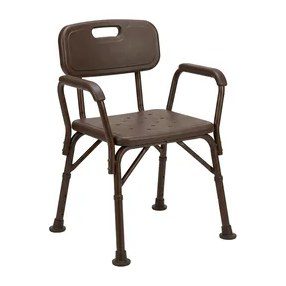
HOMCOM Shower Chair With Arms And Back
Simple white plastic chair with arms, a backrest and height-adjustable legs, one of the lowest-priced ways to sit down safely to wash.
A shower chair gives you a stable seat in the shower, so you can wash sitting down instead of balancing on wet tiles. The choice comes down to a backless stool, a chair with a back and arms, or a bench, and the size of your shower tray decides a lot of it.
A shower stool has no back or arms, takes up the least space and lets you turn on the seat to reach different parts of the body. It suits people who can sit up well without support and who mostly need to rest their legs. A chair with a backrest and arms gives more support and something to push on when standing up, which suits people with weaker balance or less leg strength. Many people start with a stool and move to a chair later.
| Type | Features | Who It Suits |
|---|---|---|
| Round or square stool | Small, backless, often height-adjustable | Small trays and users with good sitting balance |
| Corner shower stool | Triangular or curved seat that tucks into a corner | Quadrant and small corner showers |
| Chair with back | Backrest, sometimes a cut-out seat for washing | Users who get tired sitting unsupported |
| Chair with arms | Backrest and armrests | Users who push up from the arms to stand |
| Bench | Wide seat, sometimes with a back | Walk-in showers and larger users |
Measure the inside of the shower tray, and note the position of the door, the controls and the drain. The chair’s feet must sit fully on the tray without blocking the waste, and you need room to get on and off. Seat height matters as much as footprint: with feet flat on the tray, knees should be roughly level with the hips. Most chairs have legs that adjust in steps to set this.
For a small or quadrant tray, a corner stool or a compact round stool is usually the only thing that fits. Look for a narrow footprint with legs angled inwards, rubber ferrules that grip a wet tray, and drainage holes in the seat. Check the seat diameter against the space left after the door closes. If you need a back, some narrow chairs have a slim back that still fits a standard square tray.
Arms help when standing up is the hard part. They give a push-off point at both sides and stop a user sliding sideways when reaching for the shower head. Removable or flip-up arms are worth having if you transfer from a wheelchair or need a carer to reach in. Check the width between the arms against the user’s hips with a little room spare.
A hand-held shower head on a slide rail makes seated washing far easier. If the bathroom needs bigger changes, our bathroom aids guide explains the options.
A shower bench gives a longer seat, so you can slide along it rather than stand and turn. In a walk-in shower or wet room it gives larger users more room and lets a carer sit the person at one end and wash from the other. Benches need more floor space, so measure carefully. Some benches have a back and arms on one side only, which leaves the other side open for a sideways move from a wheelchair.
A static chair stays in the shower. A wheeled chair, often combined with a commode, lets a carer push the user into a level-access shower. That is a different product for a different need, covered in our shower wheelchairs guide. For a seat that folds up against the wall when not in use, a wall-mounted shower seat is another option.
Folding stools and chairs pack flat for holidays or visits to family. They tend to be lighter and less rigid than fixed models, so check that the frame locks firmly open and that the listed weight capacity suits the user. A folding stool can also live behind a door in a shared bathroom.
Bathing seats and stools are often supplied by the local council or community equipment service after an occupational therapy assessment. Many people buy privately because they are inexpensive and easy to choose, and disabled buyers can usually claim VAT relief.
The chairs and stools below were in stock when we checked each listing, and they cover backless, backed and armed designs.
Only if it is designed for it. Most of these seats are too tall or wide for a bath; a bath board or bath seat is the usual answer.
Use one with suction or rubber ferrules, keep the tray clean of soap build-up and replace worn ferrules promptly.
A stool with a triangular or quarter-circle seat that fits into a shower corner, saving space in small or quadrant trays.
Aluminium frames resist rust well. Steel frames and fixings can rust over time, so dry the chair after use when you can.
Simple white plastic chair with arms, a backrest and height-adjustable legs, one of the lowest-priced ways to sit down safely to wash.
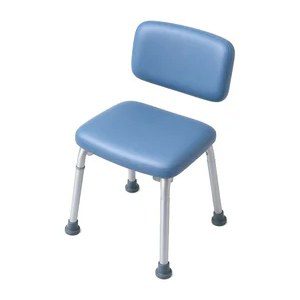
Soft EVA foam seat that feels warmer and less slippery than bare plastic, a good choice for longer showers or sensitive skin.
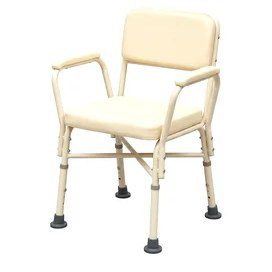
Heavier-duty chair with padded arms and back, listed to 227 kg, for larger users who need a firm push-off point.
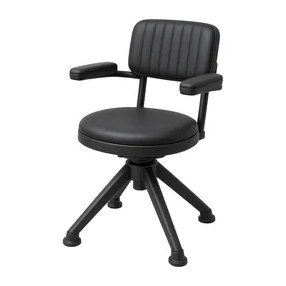
Seat that turns, so the user can sit facing out of the shower and swing round rather than twisting the hips. Listed to 204 kg.
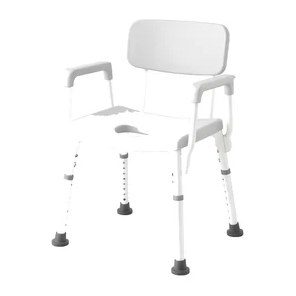
Cut-out seat that makes washing easier while seated, with a back, arms and height adjustment over several settings.
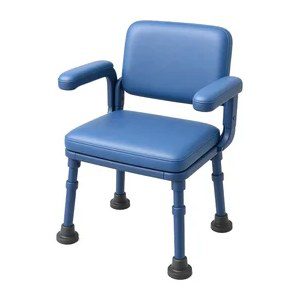
Padded seat with a back and arms and several leg heights, on non-slip rubber feet for wet tray floors.
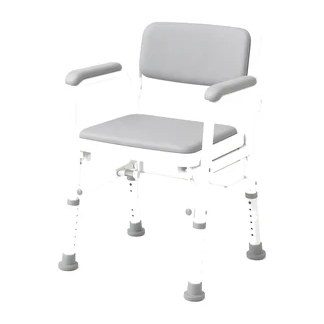
Height-adjustable chair with arms and back that stacks for storage, handy in a shared bathroom where it is not needed every day.
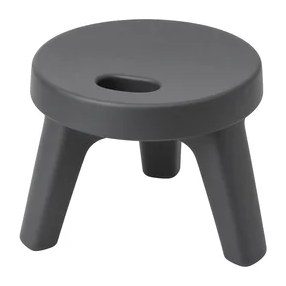
Lightweight rust-proof aluminium frame with a removable back and arms, so it can work as a stool later if needs change.
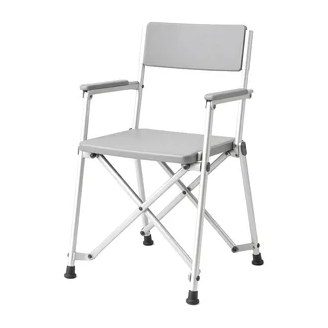
Folding aluminium chair with arms and a backrest that packs flat, useful for travel, holidays or a small bathroom.
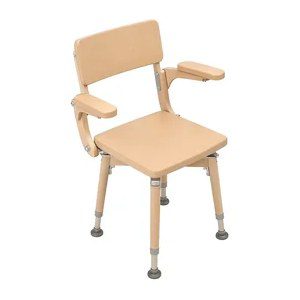
Turning seat with flip-up arms, which clear the way for a sideways transfer from a wheelchair, plus height-adjustable legs.